
The fairytale of the marionette
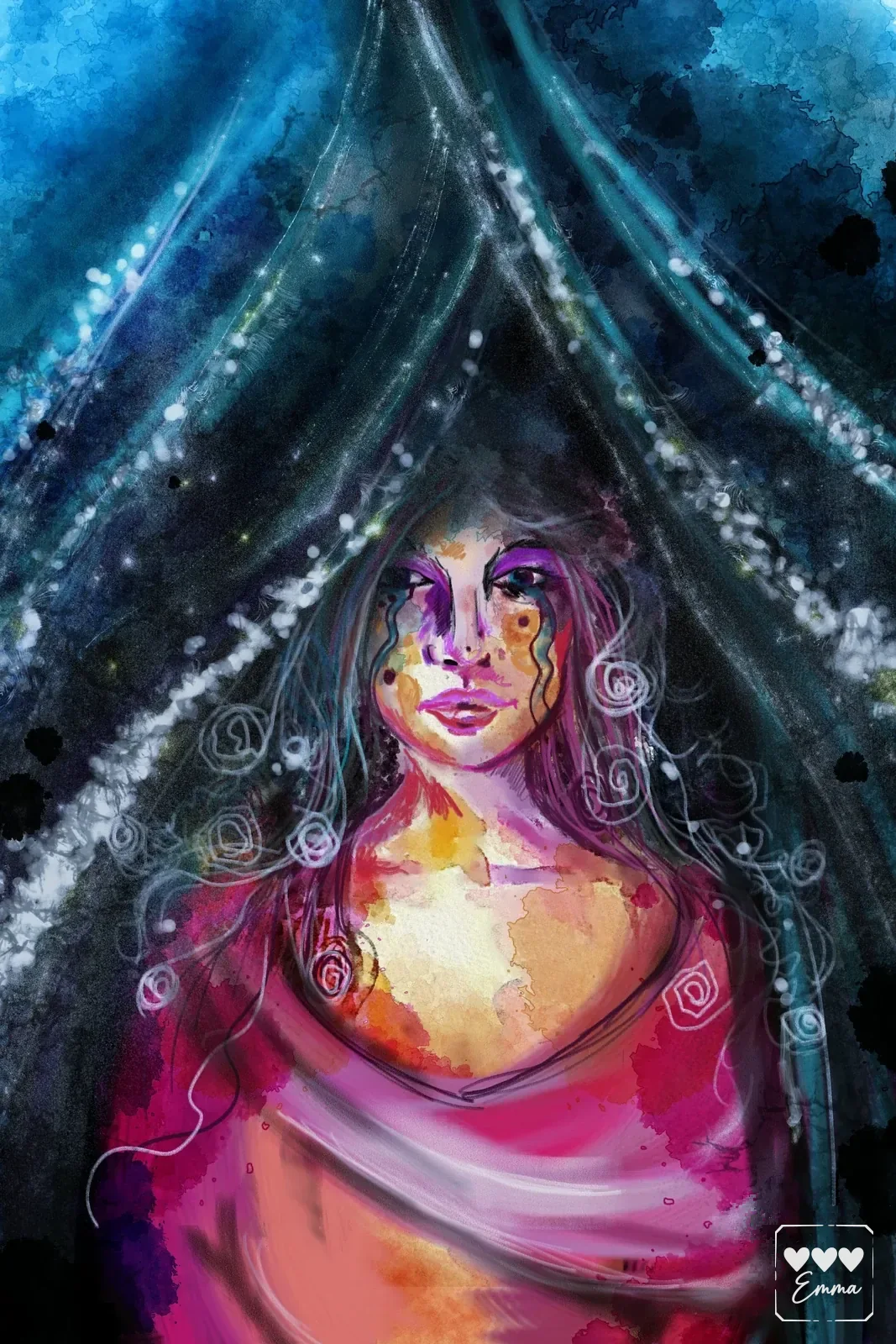
A marionette theatre is always particularly lovely to watch. How the little puppets' individual limbs wiggle amusingly, continuing to sway somewhat uncontrollably when the strings dictate the direction and carry out the movement. They seem rather clumsy in their entire existence as puppets.
But the real skill lies above. I'll call it the director's box. The area above the stage where the puppeteer stands and breathes life into the puppet. The one who knows exactly which string to tighten, how much, and in what order, so that an amusing performance unfolds for the audience.
The true art, therefore, is not what the spectators in the lower rows can see. The true art begins one floor higher, in the darkness, hidden from view.
If one were to breathe life and a mind into the marionette itself and put oneself in its position, what it expresses might be entertaining for the audience, but for the marionette itself it would be more of a torment.
It is never free. Not free in its movements, not free to decide not to perform today, and not free to live independently. Because every limb, and at the centre its head, hangs from the strings of the overwhelmingly powerful puppeteer, who determines its existence and performance from the director's box.
A sad spectacle in itself. But the figure is given a smiling mouth, a funny little dress, and even the words are put into its mouth.
Now imagine this marionette.
What happens when it grows tired of playing the same role over and over again, merely in front of a changing audience? Its entire performing life, the same role again and again. With its sewn-on little dress and its lovingly painted, smiling face, it can hardly just change its role.
Of course, a marionette theatre also grows old. From time to time, it needs renovating. The equipment, the director's area, the costumes, and eventually the little puppet itself receive a fresh coat of paint. Chipped paint on its face is painstakingly restored, the slightly cracked smile carefully repaired. The little dress is adapted to the trends of the time, the entire stage gets new furnishings, the audience seats become a little more comfortable, and the lighting improves.
But the little puppet with its freshly restored smile is still the same.
It is happy about its new dress. Hopes for a new role to match the dress.
But since the puppeteer in the now modernised director's box is still the same, the marionette itself will have to face a bitter truth.
Everything around it has changed, but its role has remained more or less the same. It would have been a good opportunity, but the puppeteer wanted it that way. And so the little puppet continues to dance, smiling cheerfully on the puppeteer's newly tightened strings, fulfilling its purpose to the amusement of the packed theatre.
Beneath the fresh paint on its own face, the little puppet begins to cry. It would have liked to try another role. It is certain that, since it has known the other puppets all its life, it could have taken on their roles at least once. Just for a little variety.
After the performance season, all the marionettes hang by their strings at the edge of the stage. It is dark and smells of times gone by.
The little puppet tries to reach the other puppets, but without success. It feels useless. Its existence is lonely among the other figures, who hang smiling from the strings of their lives and seem content with this state of being.
After a long period of loneliness, smiling in the darkness, the puppeteer returns to prepare himself and his puppets for the next performance season. He is full of ideas, carefully dusts the puppets, opens the curtain and the windows to let fresh air into the theatre. Switches on the stage lights and settles comfortably into the now velvet-upholstered director's chair. Looks down benevolently upon the stage from above. Is at peace with himself and satisfied that everything is ready for the arrival of the audience.
The little puppet is frightened down below. No, not the same play again, as it has been for all those years before. It wants to run away, out through the open window into the wide world. Until now, it has only seen the trees and watched the birds in their nests. Whenever the heavy curtain moves aside for a moment and reveals a glimpse of the world outside.
But already several strings are pulling at it. Making cheerful movements and bringing its smile into view. To the delight of the audience.
The little puppet jerks awkwardly through the old performance. It can feel the joy of its puppeteer echoing from above throughout the entire room. Sees how everyone else, marionettes and spectators alike, takes pleasure in it. Every now and then, the little puppet begins to think that this must be the life meant for it. And time after time, with every performance, it abandons its wish to discover the world.
Smiles cheerfully and submits to its role.
Every single day.
And so the years pass.
The puppeteer has grown older too. His movements become stiffer, the little puppets lose some of their liveliness, but he never lets go of the strings.
The little puppet cries bitter tears that nobody sees.
It tries to express itself, but cannot, because the puppeteer is not there at that moment, and so it merely hangs motionless in the corner, swaying quietly.
Again and again, the performance continues like this. Its entire life.
It wonders why the puppeteer will not give it freedom. Why he does not replace it with another, newer puppet. The new ones might even be lighter and easier to control. Its joints have grown old, its head heavy. But the puppeteer likes traditional little puppets and therefore always keeps it in his repertoire.
In nights of despair, thoughts of escape and liberation come to the little puppet. It struggles wildly but can never reach the floor with its tiny feet. It is tied too tightly to its strings.
It considers cutting the strings during a performance and running away. But it also knows how unhappy that would make the puppeteer. And it does not want to leave its fellow puppets behind either. Because there is no replacement for them. Without its role, the entire play would no longer be the same. A feeling of guilt weighs heavily on the little puppet. It hangs lifeless and resigned from its strings and lets the performance come to an end. It has no other choice, whether it wants to or not, it thinks.
Smiling smugly, the puppeteer ends his performance. Contentedly rests his hands on his large belly, settles back into his velvet director's chair and looks back with satisfaction on what has happened. He does not care what his little puppets feel down below. He is the master of the play. He invented it. And he will perform it until the day he dies. Just as generations before him have done.
But the marionette has been left lying there. It is not hanging with the others at the side. It has carelessly been forgotten and not returned to its place in the row.
When the puppeteer has fallen asleep, absorbed in his own self-satisfaction, an idea begins to stir within the marionette.
An idea that gathers momentum so incredibly quickly that even the marionette itself is overwhelmed by it. It begins to carefully loosen the knots around its delicate joints. Quietly, it unties one string after another, reconnects its joints with the remnants of those strings, and puts itself back together.
Finally comes the most difficult challenge, the thick main string attached to its head. Unable to see what it is doing, it eventually manages to free itself from that too.
On trembling legs, clumsily and free for the very first time, it begins to stand upright.
It is afraid of waking the sleeping puppeteer. But the longing for freedom, the dream of a different life, is so overwhelmingly strong that it slowly moves towards the large window, step by step.
It reaches the windowsill, climbs over it ... and is free.
It smiles. The little puppet smiles for the first time in a very long time. Not just its painted-on smile. No, its smile becomes one with the colour on its face. It begins to run. It feels and breathes freedom.
The little puppet runs and runs and will keep running.
The puppeteer will wake up eventually. Very soon.
Desperately, he will search for it. Find the strings lying lifeless on the stage. He will rage and fume, push his other marionettes even closer together, secure them even more tightly so that what has happened cannot happen again. He will have to rewrite his play with loud lamentations. He will be furious and left without a voice. But whether he likes it or not, he will have to carry on without that one little puppet. After so much time, he will have to give the play an entirely new form and version, adapt it to the circumstances. But he is the master director, he will manage. The audience will grow in number again with time, he is counting on that. The other marionettes will make up for the missing role and perform it exactly as he wishes.
And it will be a laughing success. Whatever the cost.
But the little puppet runs and runs.
For the first time in its life, it is truly living. The life it wants for itself. While it is still running, it scratches the dried-up smile from its face. It scratches until the very last shimmering flake of varnish has disappeared. Behind it, a faint trail of gleaming paint fragments, the remains of an old smile, marks its path.
The little puppet keeps running.
It runs and runs for a long time yet. For a long while now, no paint fragments have marked the path it has taken.
The little puppet stops.
It breathes. It is free.
And it smiles.
It smiles and laughs. Its first genuine smile. The smile comes from deep within the soul of this marionette. Tears of joy stream from its eyes and wash the last traces of paint dust from its puppet face.
Today, a new performance begins. A performance that opens without a dark director's box, without strings and joints. A performance in which the little puppet directs itself and which is allowed to change from season to season. A performance that remains alive.
The marionette keeps running. Slowly at first, then faster and faster towards the life it has dreamed of for so long. It runs and runs and runs.
And it smiles from the bottom of its heart.