
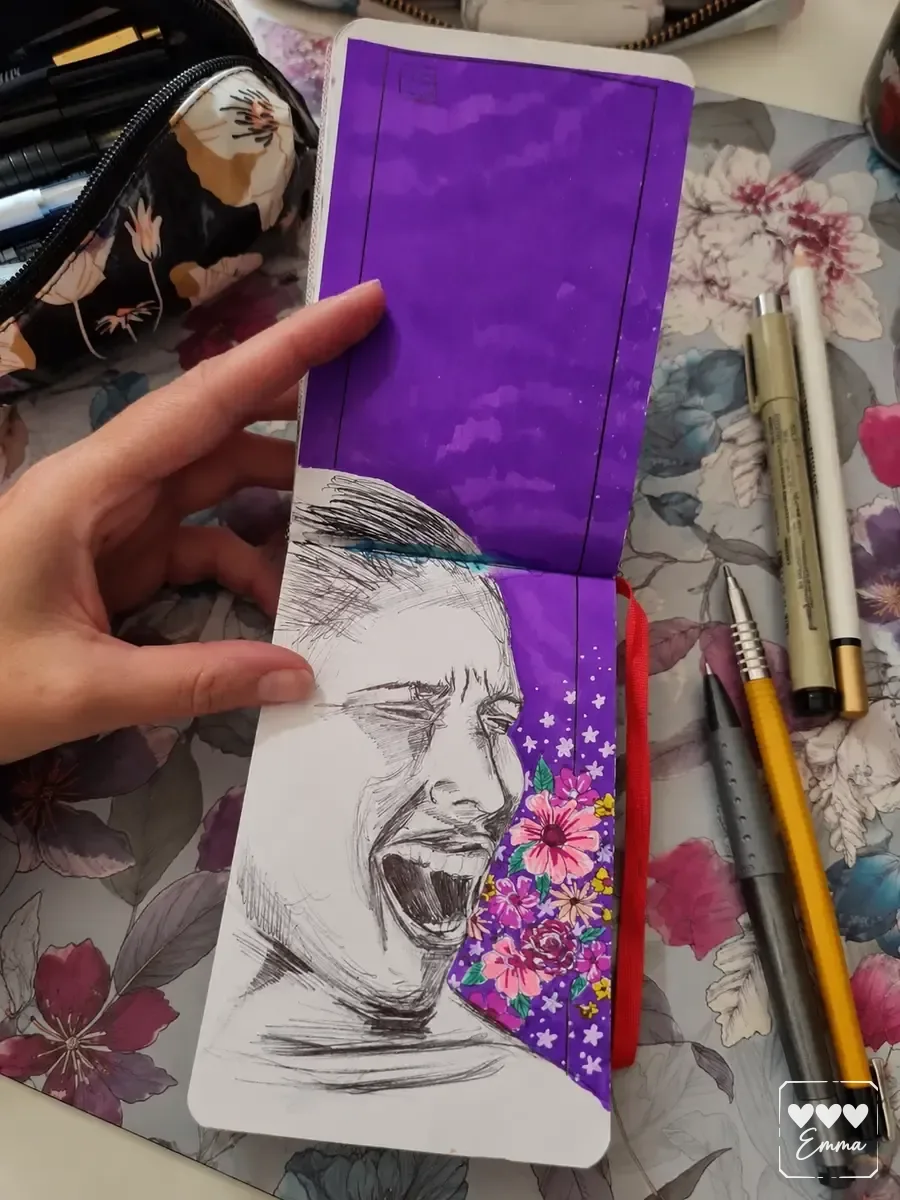
Others say they wouldn’t do it.
I heard these words recently. The question before them had been whether they would, like me, turn their life here completely upside down, or largely leave it behind, to emigrate to Sweden.
The others who had been asked would not do it.
Those who know my whole story and know me, on the other hand, give me courage. They support me and encourage me when I have doubts and fears.
In five months I’m going to Sweden.
A step I’ve been dreaming of for 20 years. One I’ve thought through again and again over the last two decades. Sometimes more intensely, sometimes less. But each time, the result was that I set this dream aside. For the sake of my family of origin, for the sake of my husband at the time, for my friends, and most recently for the sake of my children.
For 20 years I gave up this dream, because of all kinds of fears and doubts, because I lacked the means, and because I always put other people’s needs first.
After everything I’ve been through in the last year alone, it’s like a miracle that paths are suddenly opening up, that help is being offered that I would never in my life have asked for, and that things are smoothing out to make this step possible.
I have various reasons, not only my own need to make a dream come true. I want to build something I can leave to my children.
Half of my working life has already gone by. Here, as a single mother of two children, I have no way of ever achieving anything at all. Neither paying off the debts I’ve built up since my divorce from my ex-husband any faster, nor saving anything in any other form that the children could benefit from in the future.
In Sweden I’m now being offered ways to change this too. At least in the foreseeable future.
In the long run I will work to build something I can pass on to my children one day. I don’t see everything through rose-colored glasses, and the beginning will surely be hard in many ways. But it’s worth a try. I would deeply regret not taking the hands that are being held out to me.
All outward circumstances aside, Sweden gives me a calm so deep that my nervous system has only ever known it there. Here, in the home of my childhood trauma, I feel drained and never really come to rest.
That is also what has kept me traveling there, again and again, for 20 years.
“Would you do it like that?” – “No, I wouldn’t.”
So that is an incomplete question and answer.
Because those who give this answer so lightly and with such conviction probably have every reason to. After all, they haven’t been carrying my story around with them for almost 40 years.
They haven’t had the same experiences, haven’t lived through what I’ve lived through, and so they don’t have the faintest idea what drives me.
And no one who doesn’t know me can judge whether I made my decision lightly. No one.
No one knows how I struggle with it, how big my fears are, too. How much it takes out of me, how much strength it costs me, to take this step against so much resistance and against my conscience. And no one can assume that it’s easy for me.
Of course I’m looking forward to the house, the garden, freedom, a different way of feeling about life, to turning my dream into reality half a lifetime later.
But what goes on inside me besides the anticipation, no one can judge. And to say, “I wouldn’t do that,” and so often to tie a reproach to it, is something I could only allow myself if I understood the whole story.
But is that even necessary?
No.
Because this is a decision that concerns my children and me. And that is all. No one else can think or feel it, and no one else has to understand or judge what I do. Everyone lives their own life, and each one a different one.
And I wouldn’t wish on any of those who judge what I carry on my shoulders, on my soul and in my heart. Not to mention in my head. So it’s always easy to form an opinion and to voice it, too.
But living with what I have, often just surviving it, surely no one would want that either.
I don’t want to complain, I don’t want to suffer. I’m in the middle of healing, brave for the first time in my life, and for the most part able to cope with what is asked of me. Several doctors have already asked me how I’m able to work at all. People with my diagnosis, C-PTSD, are often no longer able to work. I understand that completely.
But I’ve been fighting my whole life. I’m not someone who gives up for long. When I can’t manage on my own anymore, I get help. When I’m weak, I rest.
So I always keep going, no matter what, and have for decades. And for the first time, I didn’t have to ask for help, didn’t have to fight. It simply happened to me. A little bit of luck.
If someone knew all of this, they might still say, “No, I wouldn’t do it that way myself.”
But maybe they would meet my story and my decision with a little more understanding. Maybe they wouldn’t have to share my decision, but they could at least understand why I made it.