
What does an inheritance really mean. The things that are passed on from generation to generation. The material possessions, but also the qualities, habits, family traditions and character traits. And not least the traumas that are handed down from generation to generation.
Now, as a rule, or in the best case, families follow a path through the generations that rests on the next generations growing into a healthy system of trust, love and respect, and passing these qualities on in turn. Financial security, in the best case, is a skillful interplay of good personal qualities and the will and ambition to build something worth preserving. And to pass on what is preserved to one’s descendants in a positive way, so that it grows. Whether it is about emotional intelligence or – at the bottom of the list – material goods.
With the first flashbacks last year, I learned this:
I was handed something I do not want to accept. After all, an inheritance can be refused.
Instead of growing up in a system of trust and cohesion across generations, I grew up in one of those family structures that have probably been passing on their trauma for a long time. Since both sets of grandparents grew up as teenagers or young adults during the Second World War, it seems likely that at least their experiences of the war left their marks. In one of them more noticeably during his lifetime than in the other, but you could feel it.
No one talked about it. On neither side of the family. Understandable – who likes to talk about that. But no one worked through it either. And so what they had lived through ate its way into the hearts and minds of those affected and was passed on to the next generation along with their material means.
I can only guess what the grandfathers went through in wartime, and not only them, but the grandmothers too. In my memory, as far as the war was concerned, they play a secondary role.
But that rape, abduction and exploitation are the greatest dangers for women in war – we do know that, but that was not talked about either.
So my mother, too, grew up in such an environment, and from birth she came into an inheritance that the postwar generation was often handed. A system of silence and repressed trauma, of strong men who had survived and women who held the family together.
In this particular case, with a traumatized, narcissistic father who held the female sex in contempt, or at least saw it far below men in the pecking order, certainly not an easy inheritance.
In those days, daily bread and rebuilding the homeland were what counted.
As an unloved first child, because she was born the wrong sex, certainly not a pleasant childhood, at a time when the first blossoming of the postwar years was already putting out its shoots.
Luckily, though, the father still had two good shots left, which brought forth the hoped-for sex in all its glory.
So while a girl was growing up who was neither loved nor respected, who could hardly hold her own beside the men of the house – and even if she had wanted to – was not allowed to, the inheritance of the war survivors crept through the family system. And over the years it grew into a considerable sum.
Thanks to ambition, income and standard of living were secure. The buds turned into blossoms, and all the traumas and fears there had ever been were swept under the flower beds together with the ashes of the war.
Whenever the consequences of these experiences surfaced now and then over the decades, the broom was silently fetched from the closet, and the remains of what should have been looked at and worked through were swept out the door.
If the dustpan got too full, it was later emptied into the homes of the next generation as well, so that they in turn could fertilize their splendid carpets of flowers with it.
So my mother grew up as the only daughter in a patriarchal home, inherited the art of sweeping from her mother and passed it on. Not only that – as so often, possessions multiply in the boom years. She perfected what she had learned and passed it on to her own children in turn.
Silence, enduring, repressing, lying, denying. Paired with the traits of submissiveness, resignation and the drive to have secure wealth for oneself. In the emotional as well as the material sense.
Based on the experiences I have had to go through in my life, I credit her neither with a halfway happy childhood nor, even less, with the ability to experience a loving and respectful relationship between a man and a woman. Why?
Because traumas are passed on. Why? Because it is normal. Because from generation to generation people learn what it means to love, to multiply, to preserve and to carry on or to share. You can trace these structures in all kinds of specialist literature. Once you are in the victim role, it is hard to break the familiar patterns. Victims and perpetrators are drawn to each other as if by magic, because their nervous systems are conditioned to serve each other’s needs.
And so those affected often find themselves in a cycle of violence and often recognize it too late. Breaking out of it is hard and not possible for everyone. You learn strategies and your own survival mechanisms in a family in which violence has become the normality you live with. You learn to tolerate oppression and not to recognize abuse in its various forms for what it is.
With this family history, I can assume that my inheritance was already calculated when I was born.
The wealth of property and status my parents built up did give us children a “carefree” childhood in the 80s and 90s, complete with house and garden, but this home was built on the soil of the war. Its foundation stone was laid by my mother’s father, who for decades, until his death, had secured his regular seat in it.
An executor of the inheritance, so to speak.
My father’s parents play only a minor role in this story. Their legacy is a different one.
My father, however, came into an inheritance he proved himself worthy of. He did his part to preserve the family property and went on perfecting the normality of what had been learned.
Silence, denial, violence.
Mostly invisible or hidden. At least that is what runs through my memories of this family system. Together with a woman who, for her part, had learned from an early age to stay silent, to repress and to endure.
I find it hard to imagine that my mother was always happy with this. But perhaps relieved, because most of what happened at home was not aimed at her. And after all, she had learned to stoically endure what her ancestors had passed down and handed over to her.
Many a sorrow she smothered with compensation. Gifts, a safe, cozy home, a beautiful garden to the delight of the neighbors. I know it from my own life. Material possessions or superficial things distract you and satisfy your wishes for a while.
And so, over the years, my parents’ possessions multiplied here too.
They kept building on them, at the expense of those who in turn had come into the inheritance against their will.
And we children, too, learned to stay silent, to repress, to endure, and we fell into line in the patriarchal family system that stretched across two generations.
I carried this inheritance with me until I was 42. And then, after I had understood everything I had repressed before and could not or would not see, it was clear to me:
I refuse this inheritance.
That I would be disinherited by my parents within a short time, I actually saw coming. From their point of view, a logical step.
And what am I missing out on? What am I giving up? What exactly, that I had not already given up of my own free will?
Can money be compensation for what I went through?
No.
No money in the world can pay out my childhood, and I will pass none of it on to my descendants.
I would not have chosen a financial inheritance either. Not of my own free will. So their consistency is the first respect my parents have shown me, in that they accept and honor my decision to refuse the inheritance completely.
I will sue for my compulsory share when the time comes. And I will either leave it to my children, but knowing them, they will refuse the inheritance too.
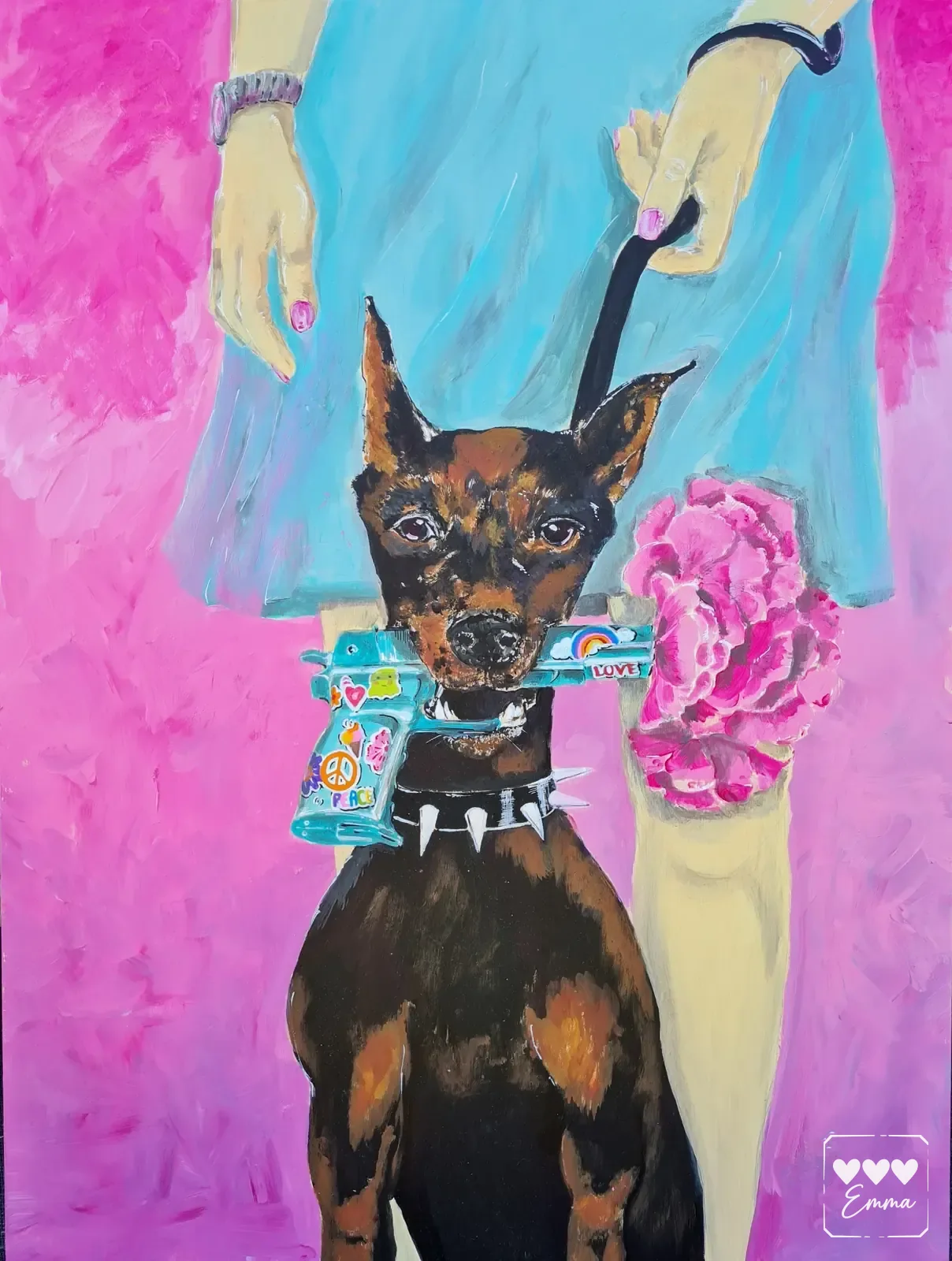
And then I will donate the remaining money. To an initiative protecting children and adults who have become victims of sexualized violence. Not because money could make up for what happened, but because I want to decide for myself what comes of it in the end.
For me, that is the only right thing I can do with my parents’ legacy.